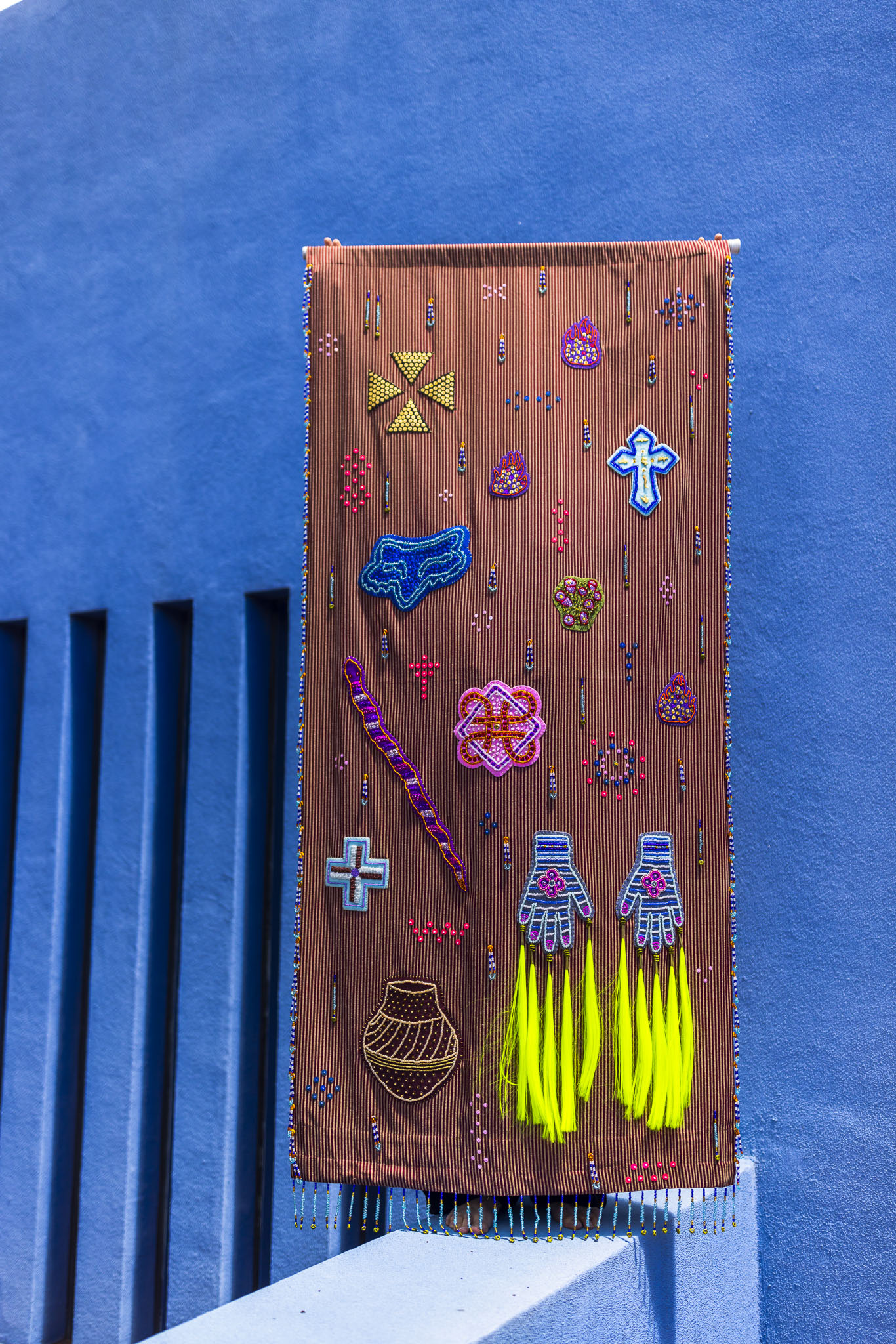
Fantasy Heritage
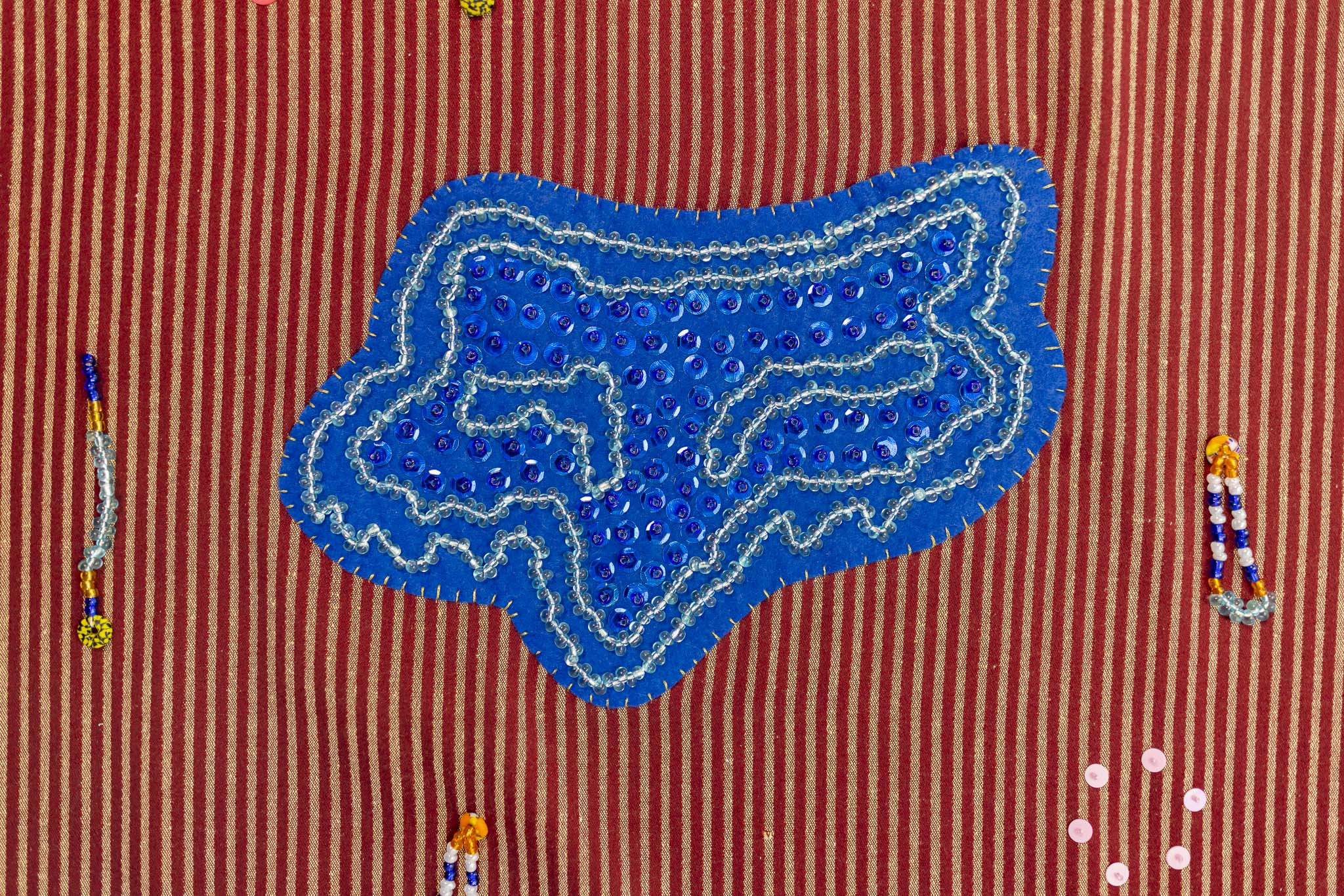
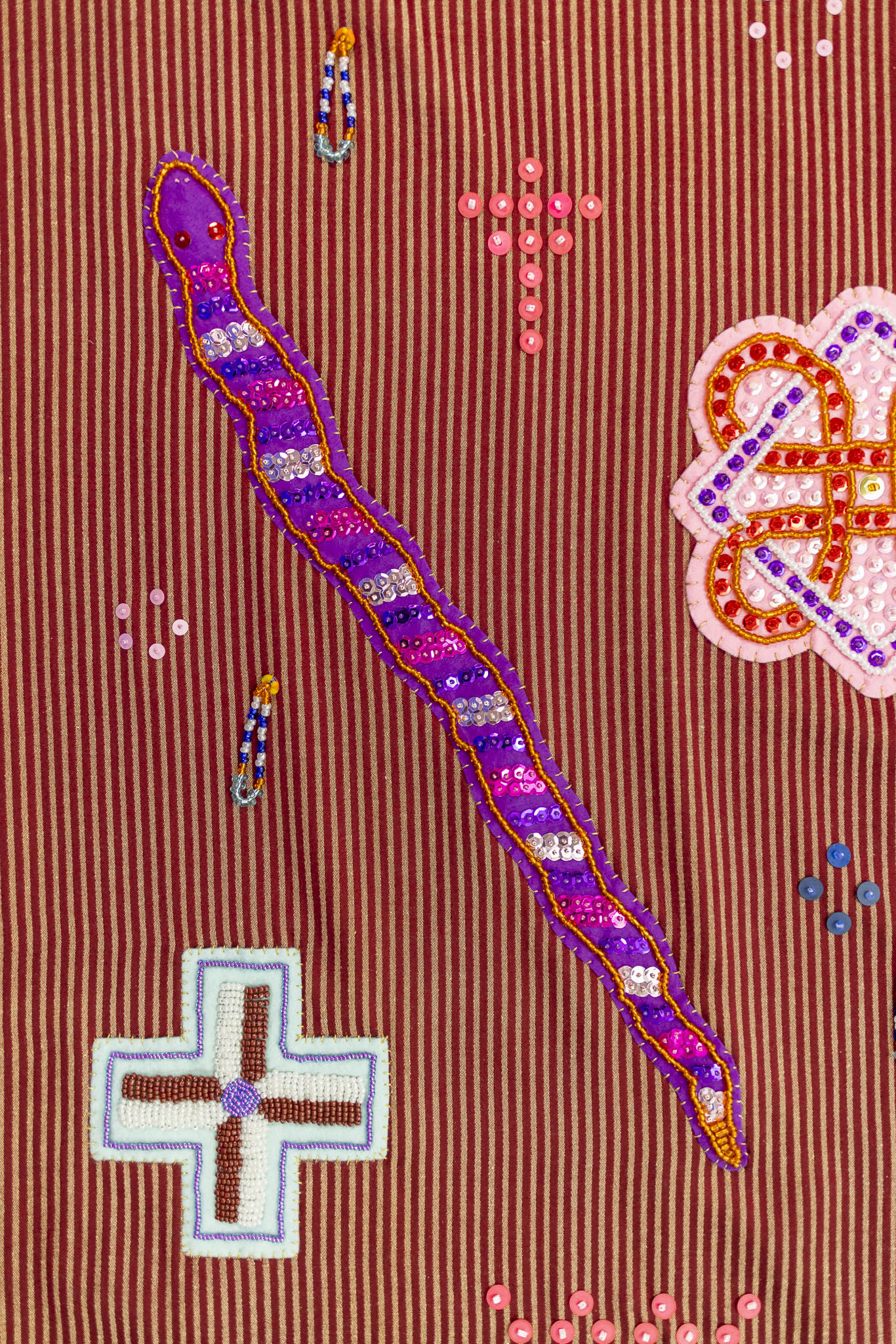
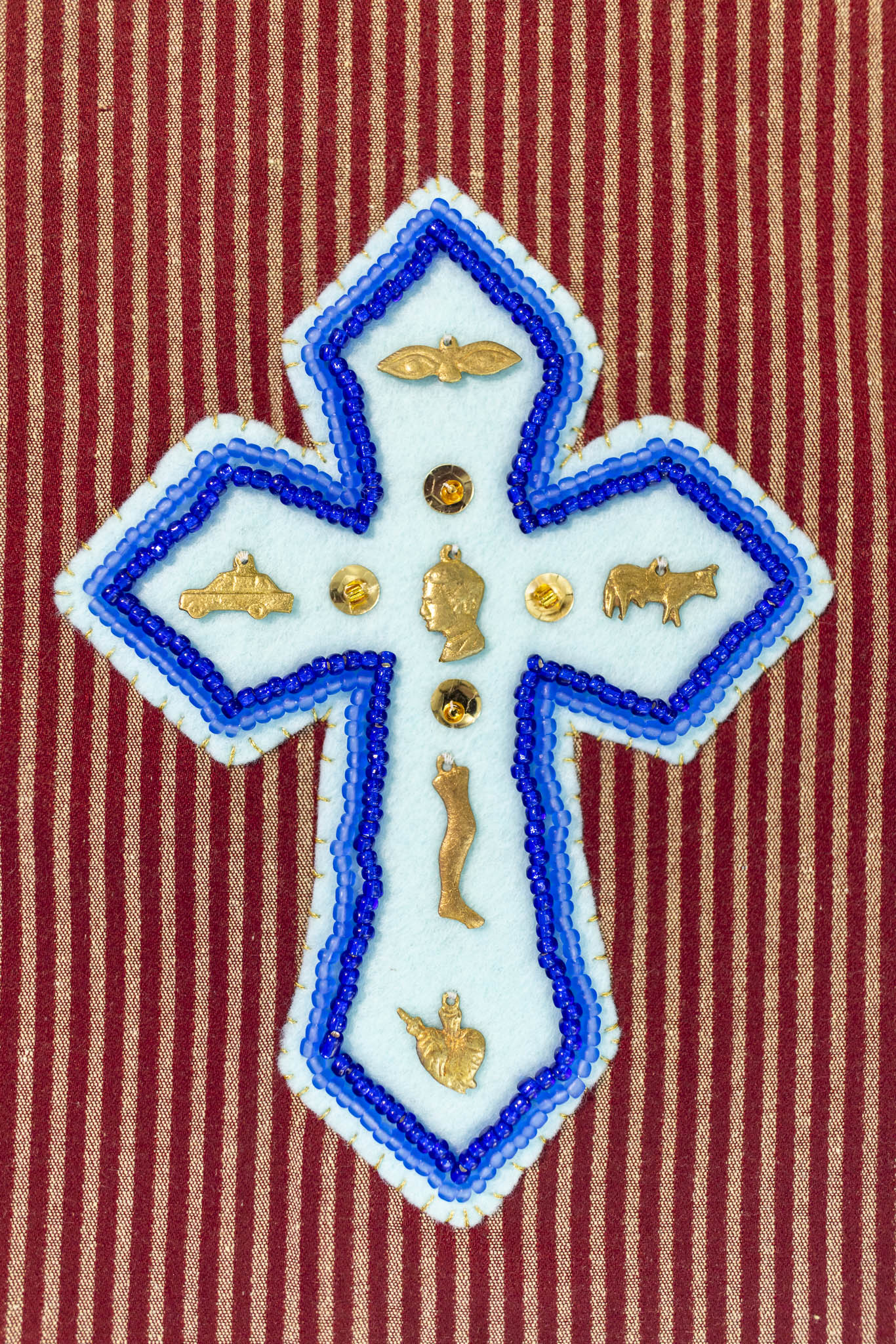
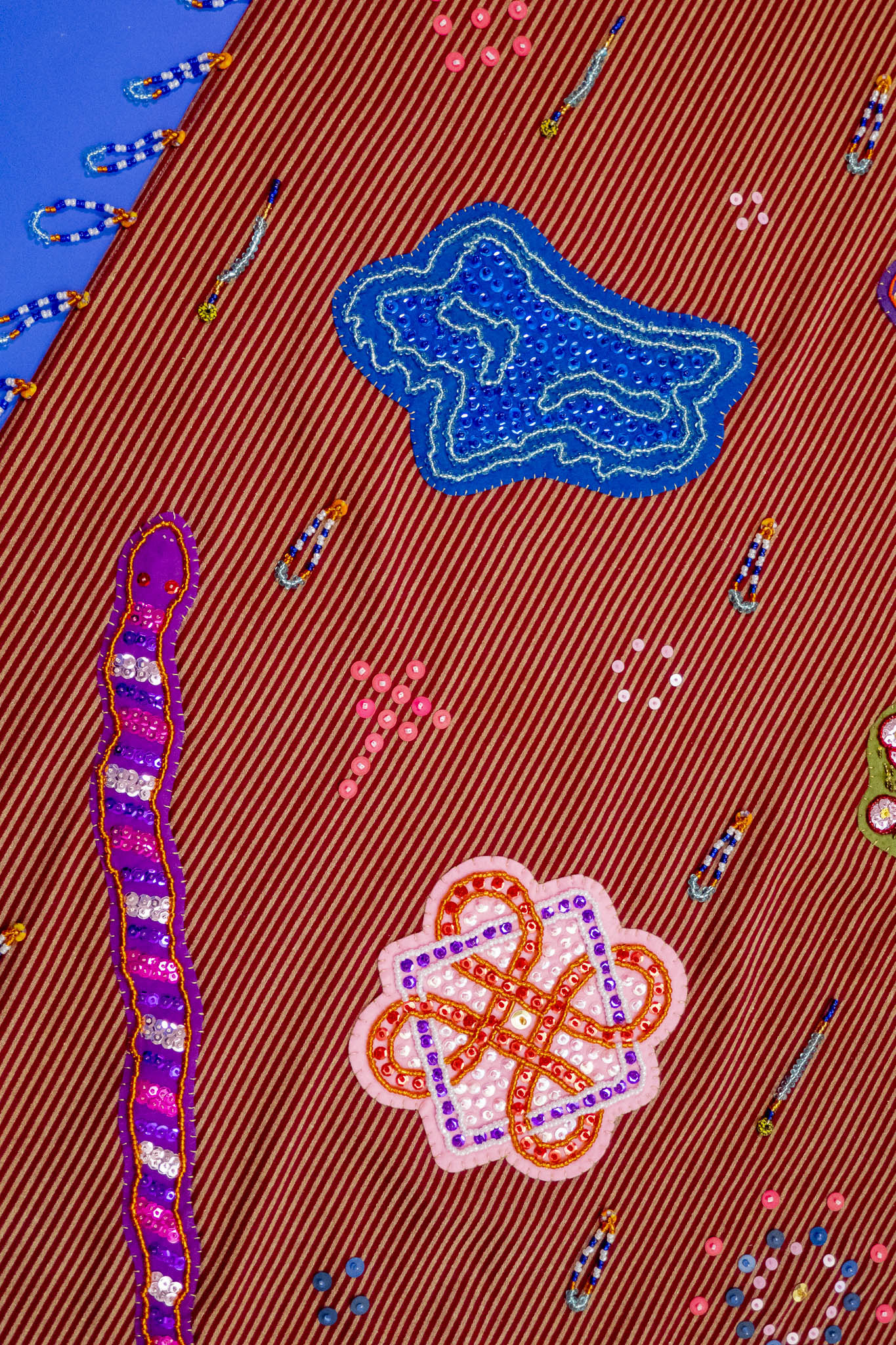
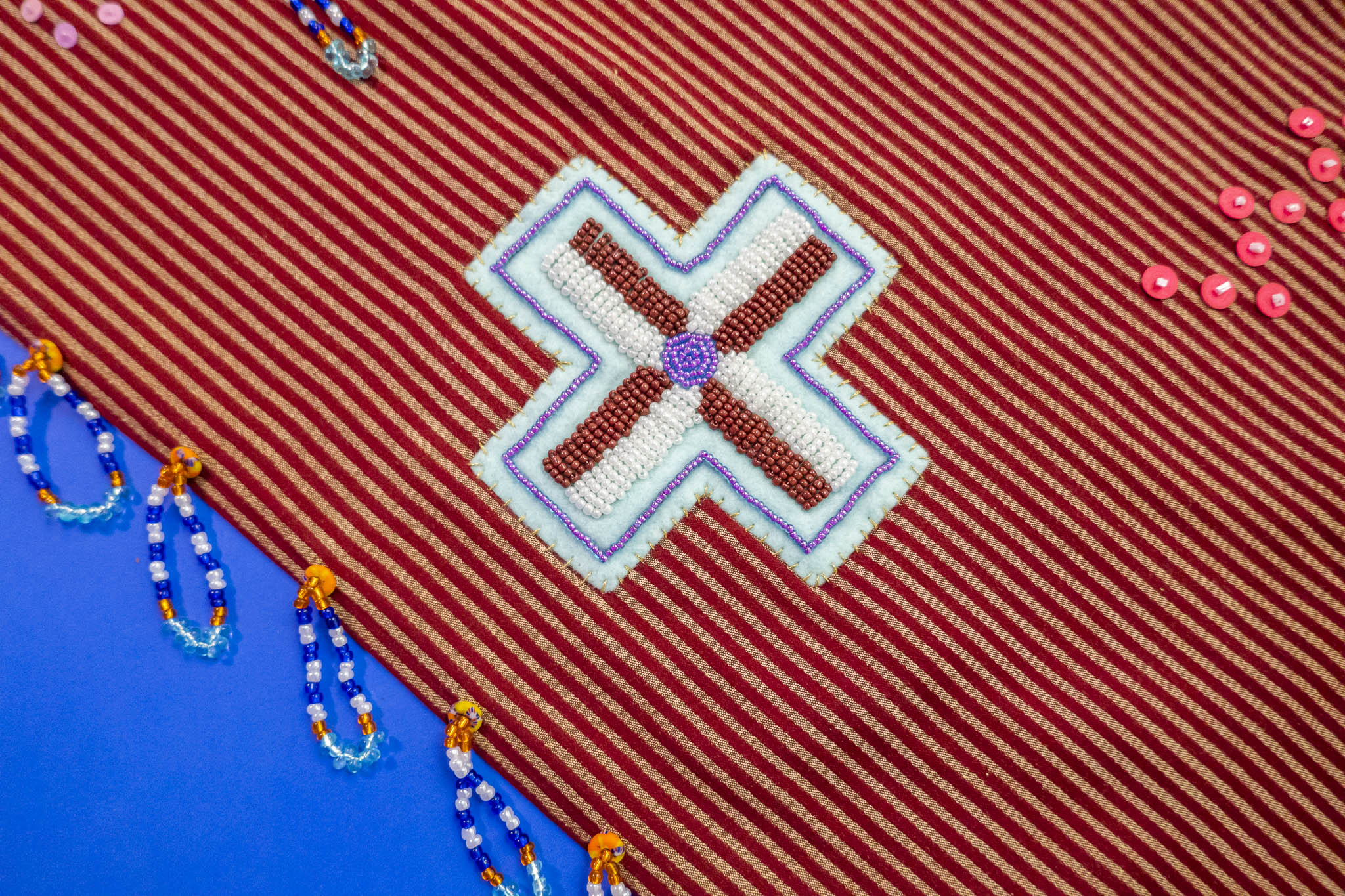
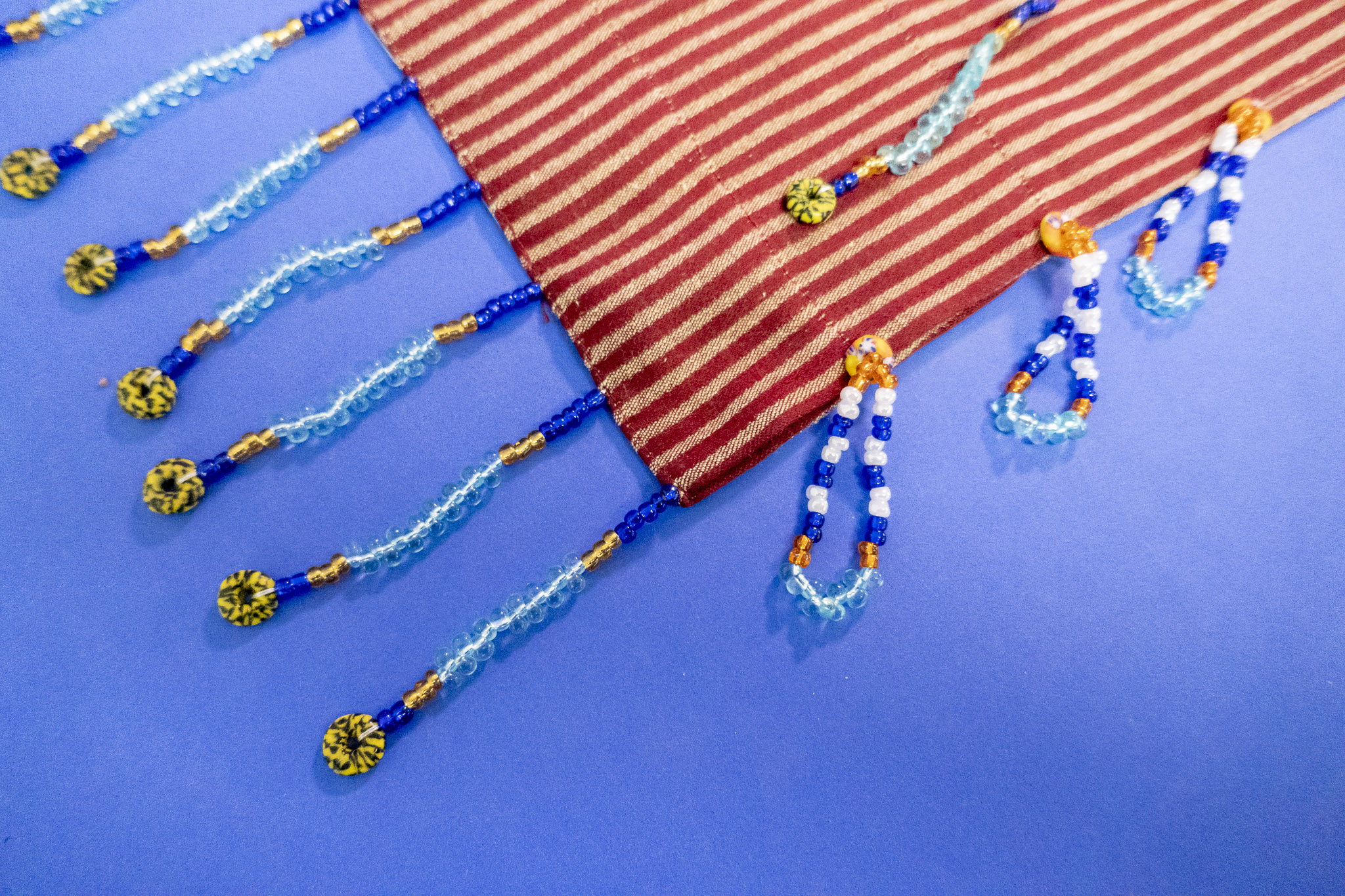
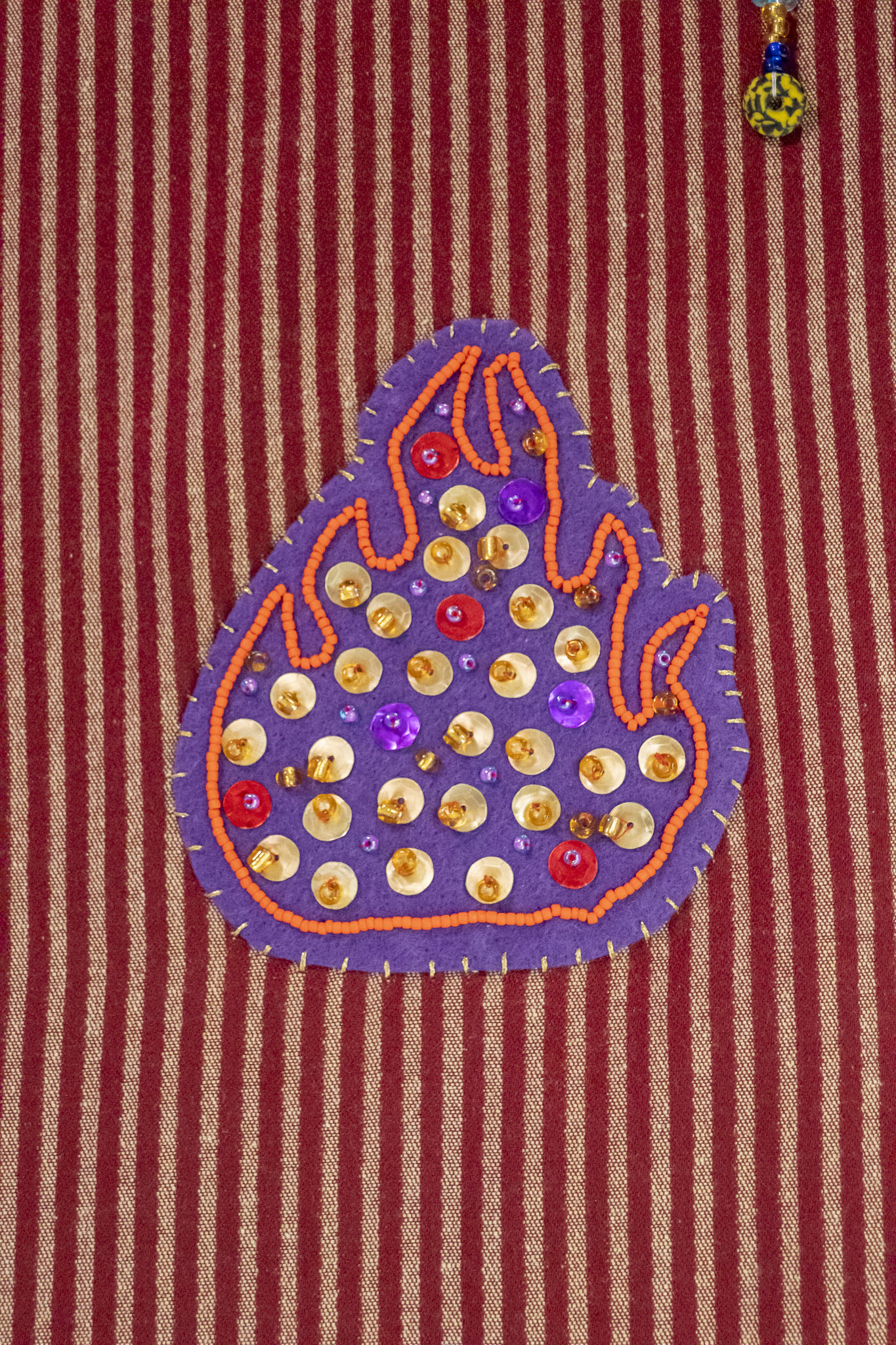
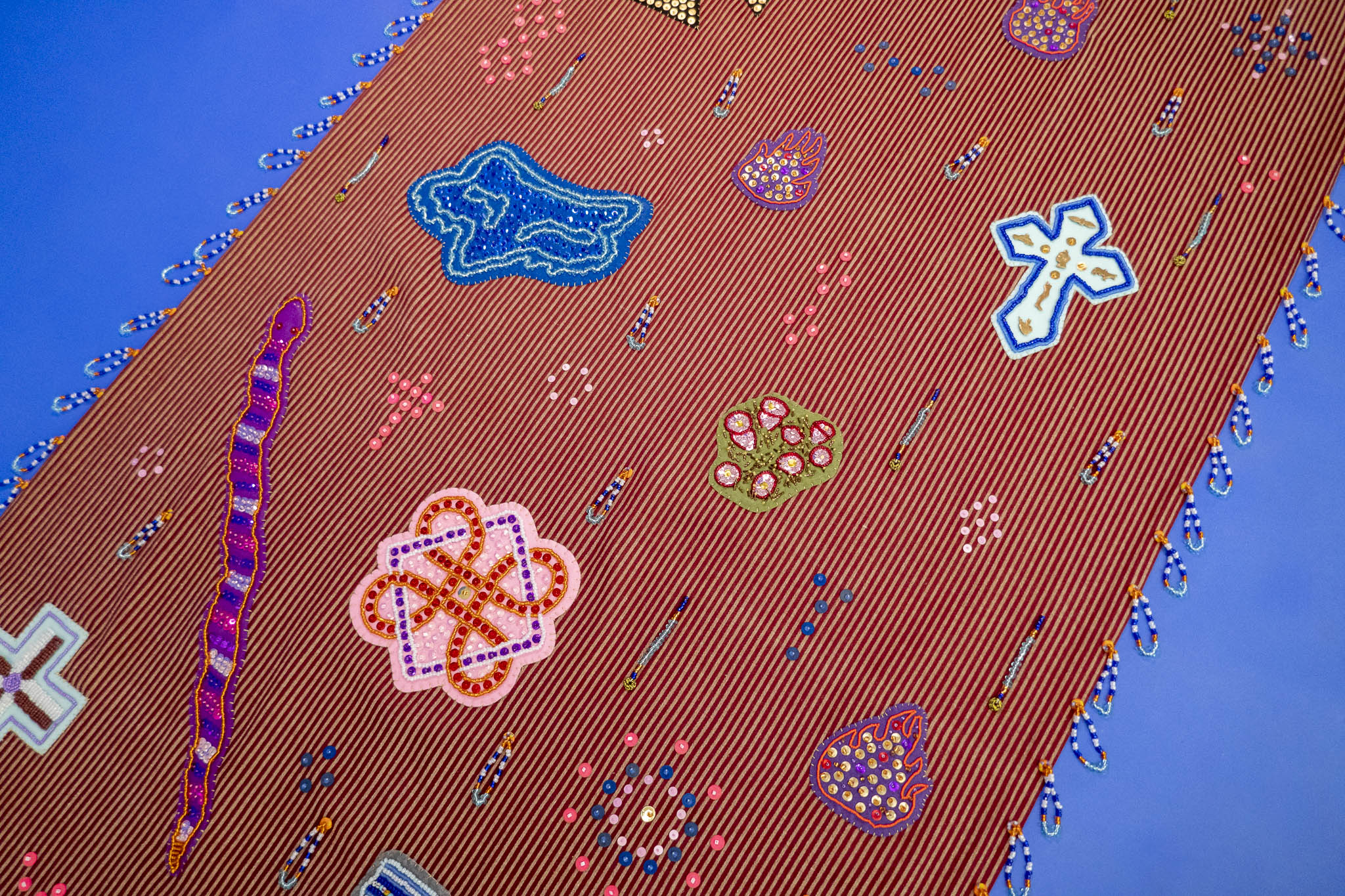
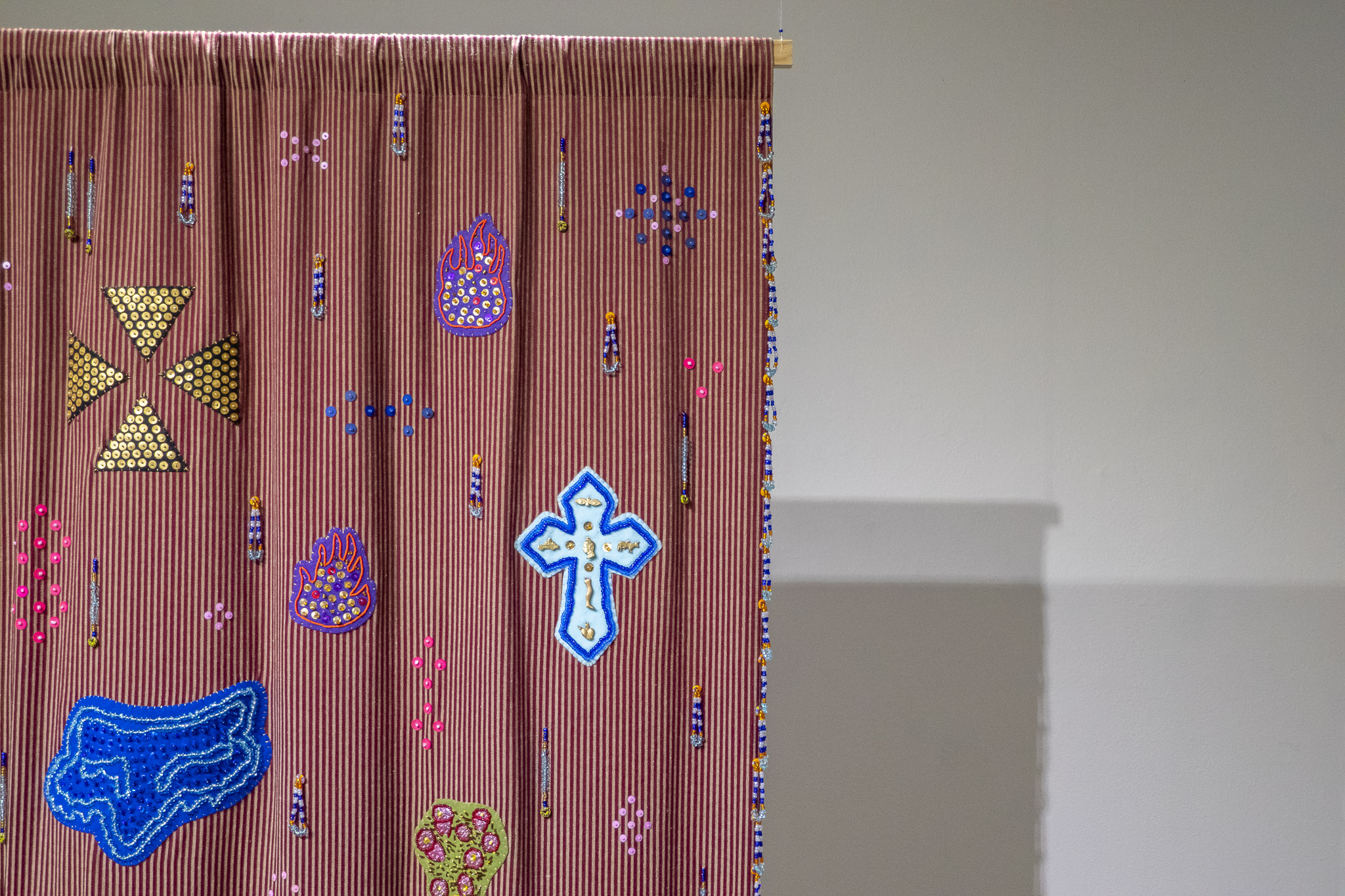
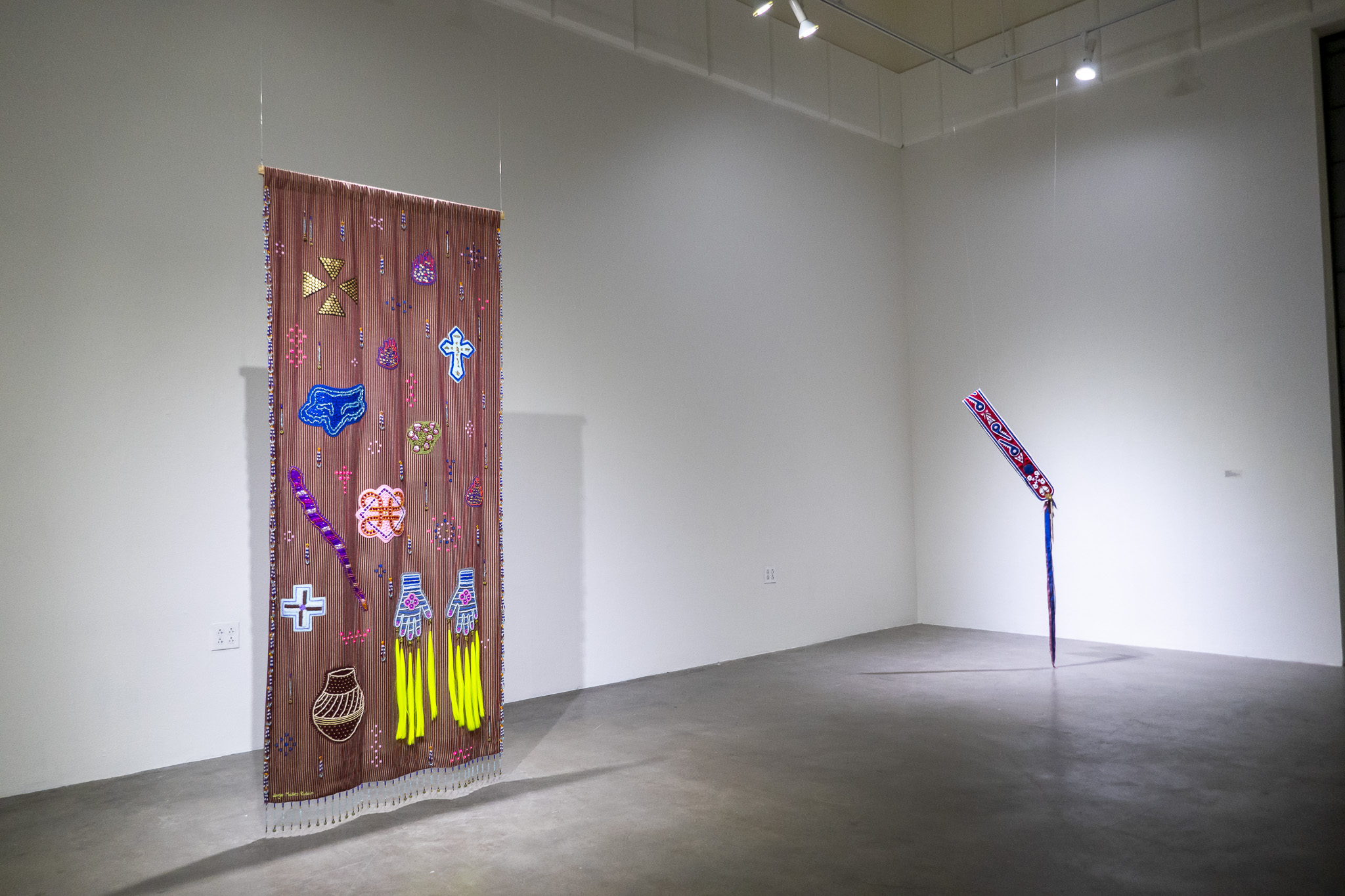
Fantasy Heritage features a constellation of talismanic symbols carefully hand-embroidered onto a found curtain. The work borrows its name from “Spanish Fantasy Heritage,” a term coined by historian Carey McWilliams in 1948 to describe the romanticised and whitewashed myth of Spanish colonial history in California and the Southwest, one that erases the region’s Mexican and Indigenous histories.
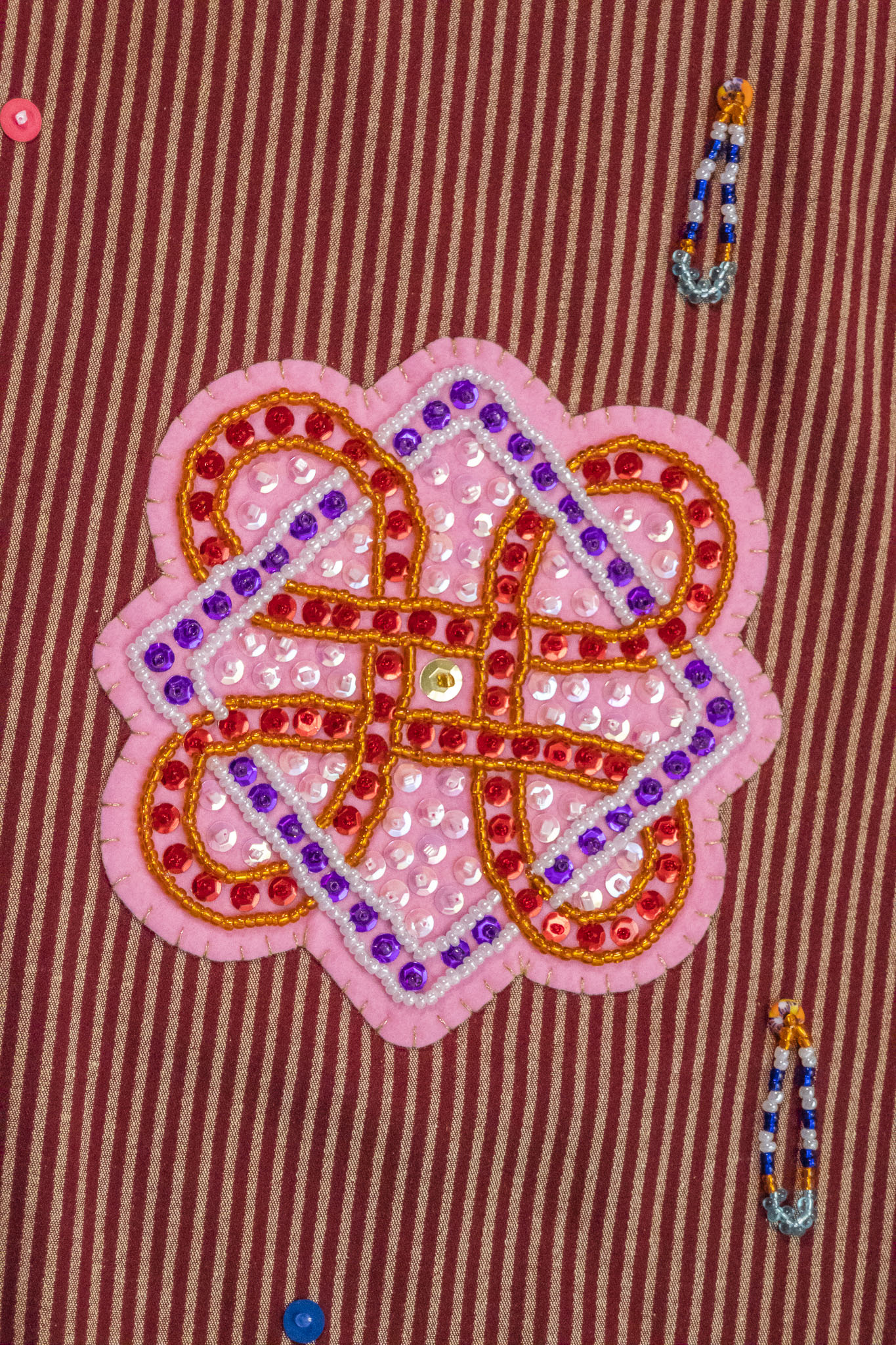
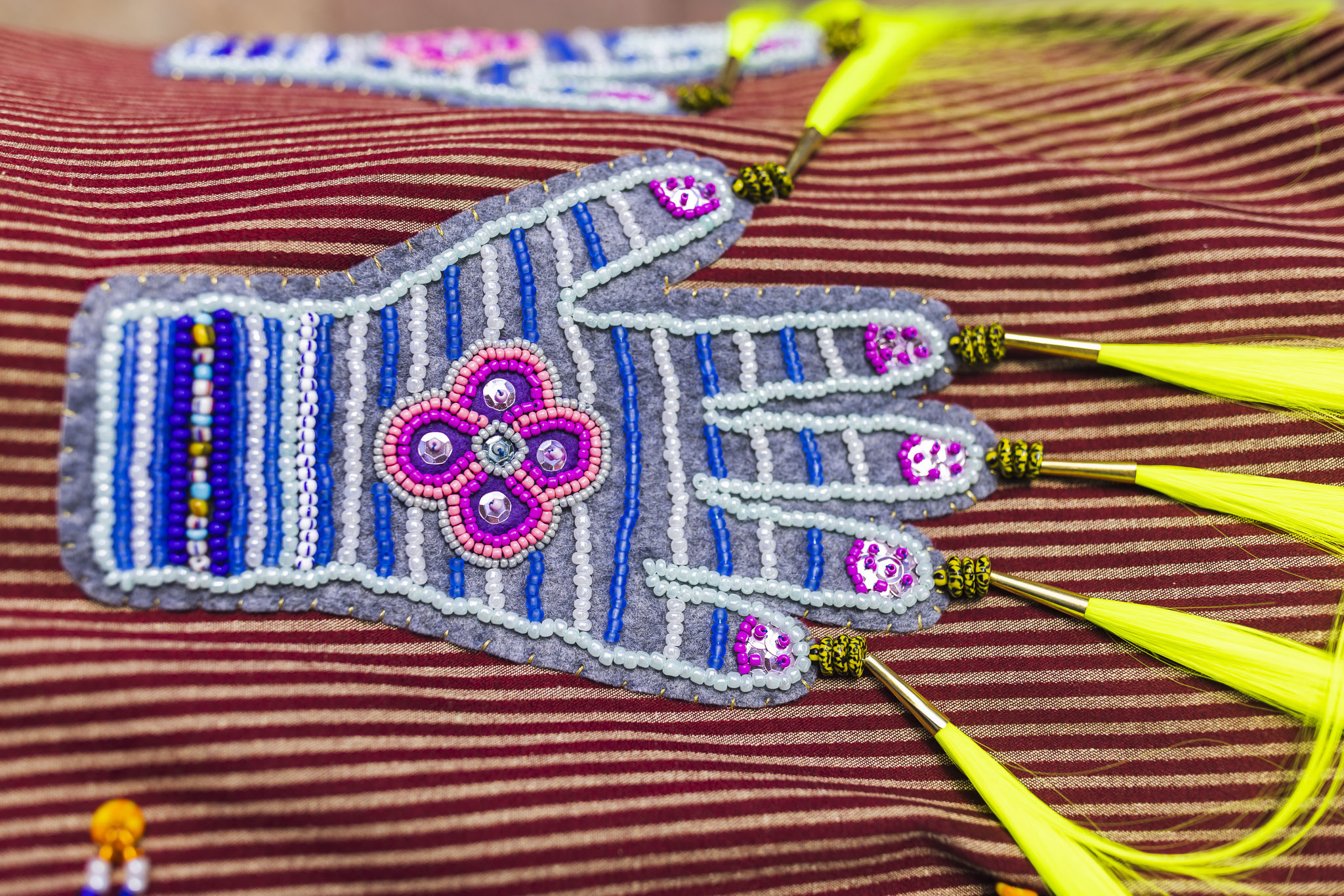
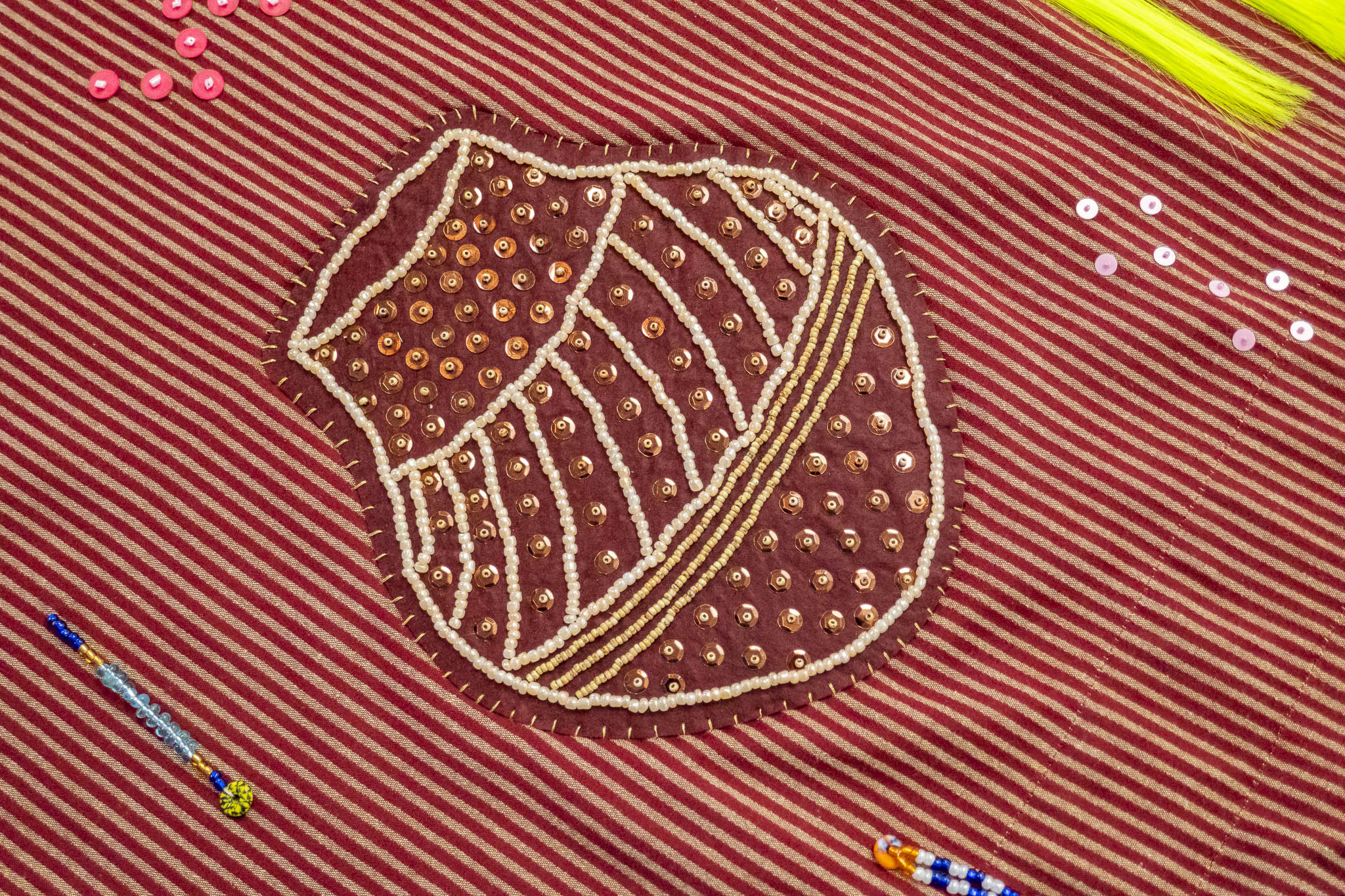
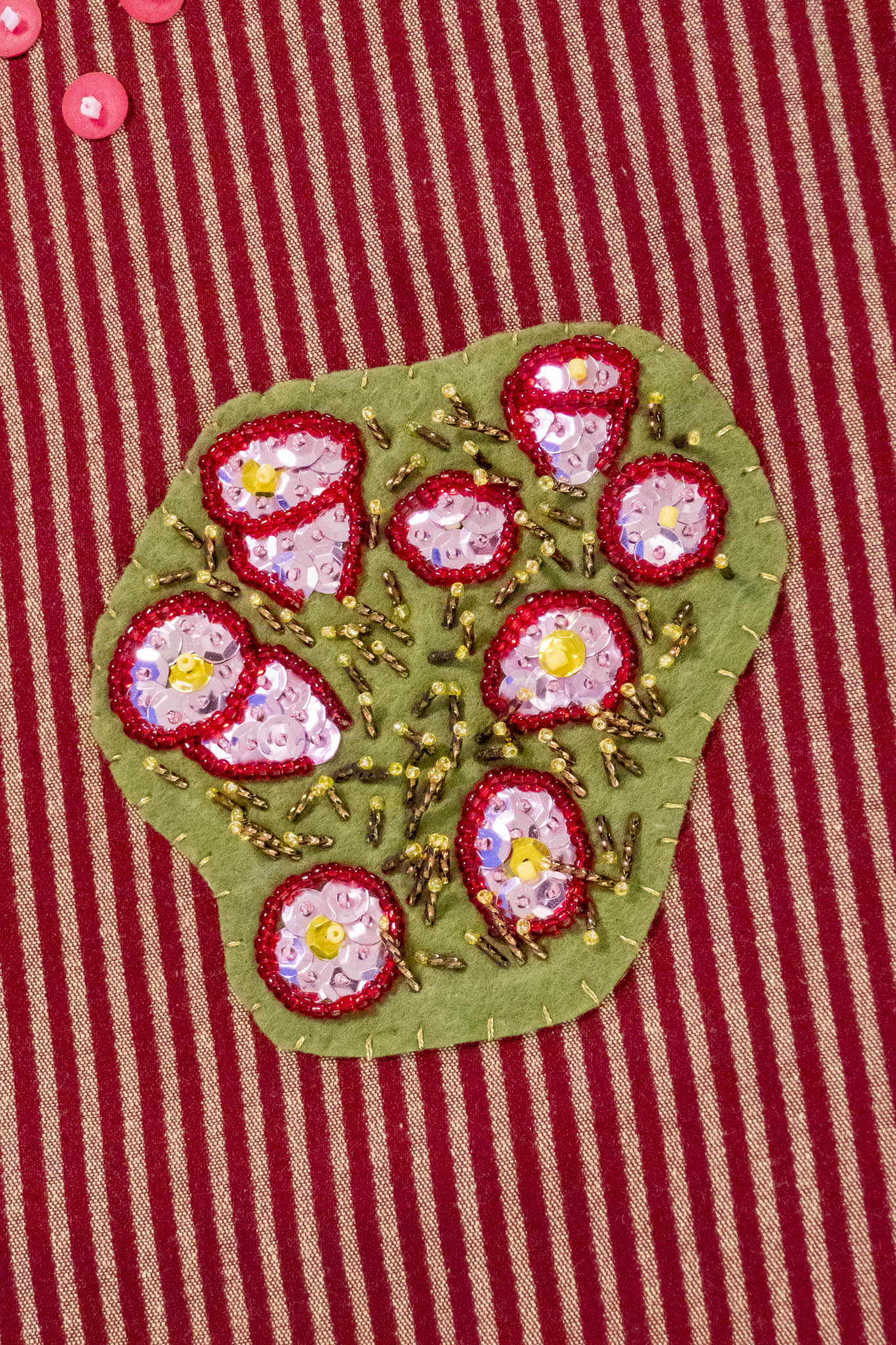
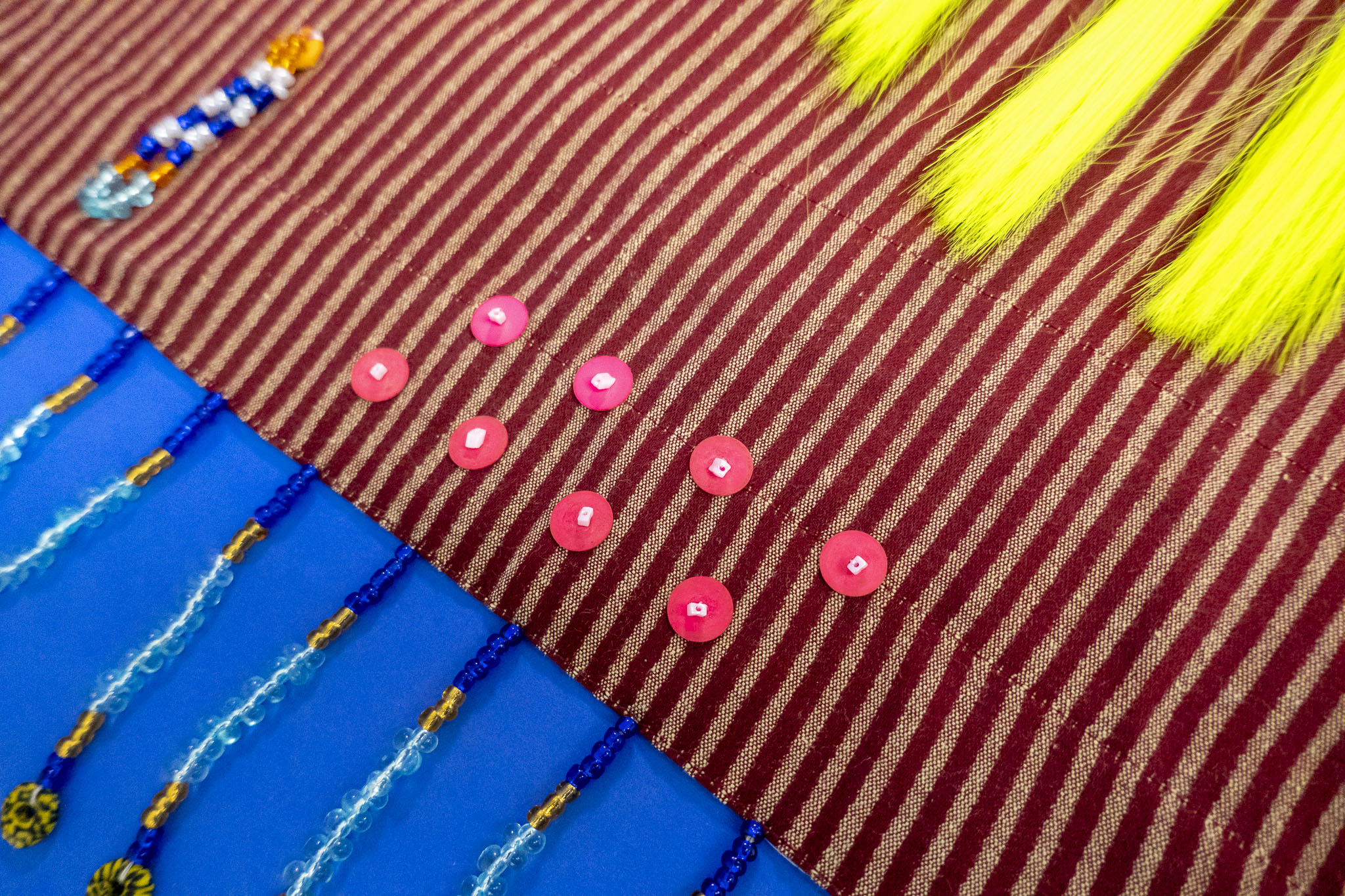
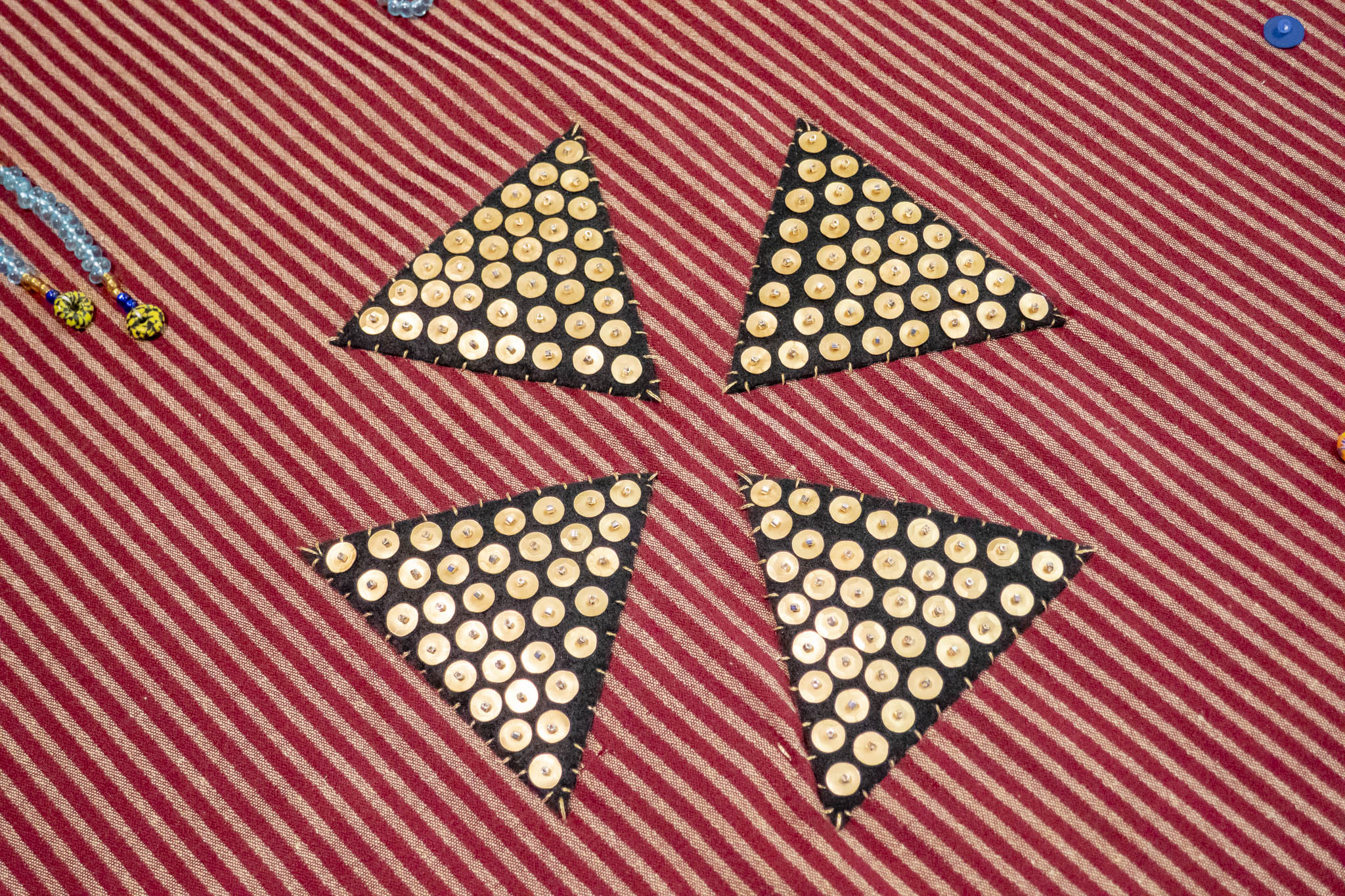
Devotional charms, brand logos, geometric patterns, animals, plants, stars, vessels and ancestral icons illuminate this unstable sculpture. The reclaimed curtains, hovering just inches above the ground, become a shared yet contested space of peoples, objects and cultures. Among these symbols is an interlaced design derived from a European illuminated medieval manuscript. Similar knots and interwoven motifs can be found across early Byzantine art, Celtic ornamentation, Roman mosaics, Islamic art and Yoruba beadwork, tracing visual languages that have travelled across geographies and centuries. Another particularly striking element is a pair of life-size hands decorated with floral motifs and long fluorescent synthetic hair, an unexpected and contemporary element recalling horsehair tassels often incorporated in Native American beadwork.
Blurring the boundaries between ancient and vernacular, local and migrant, Fantasy Heritage reflects on identity not as something fixed or purely inherited, but as a diverse and syncretic phenomenon continuously shaped through movement, colonial encounters, displacement and cultural entanglement.
This work was made while in residency at the Santa Fe Art Institute and the Institute of American Indian Arts in Santa Fe New Mexico, as part of the Transatlantic Rising Stars Project 2026 supported by the European Union Delegation to the United States of America.

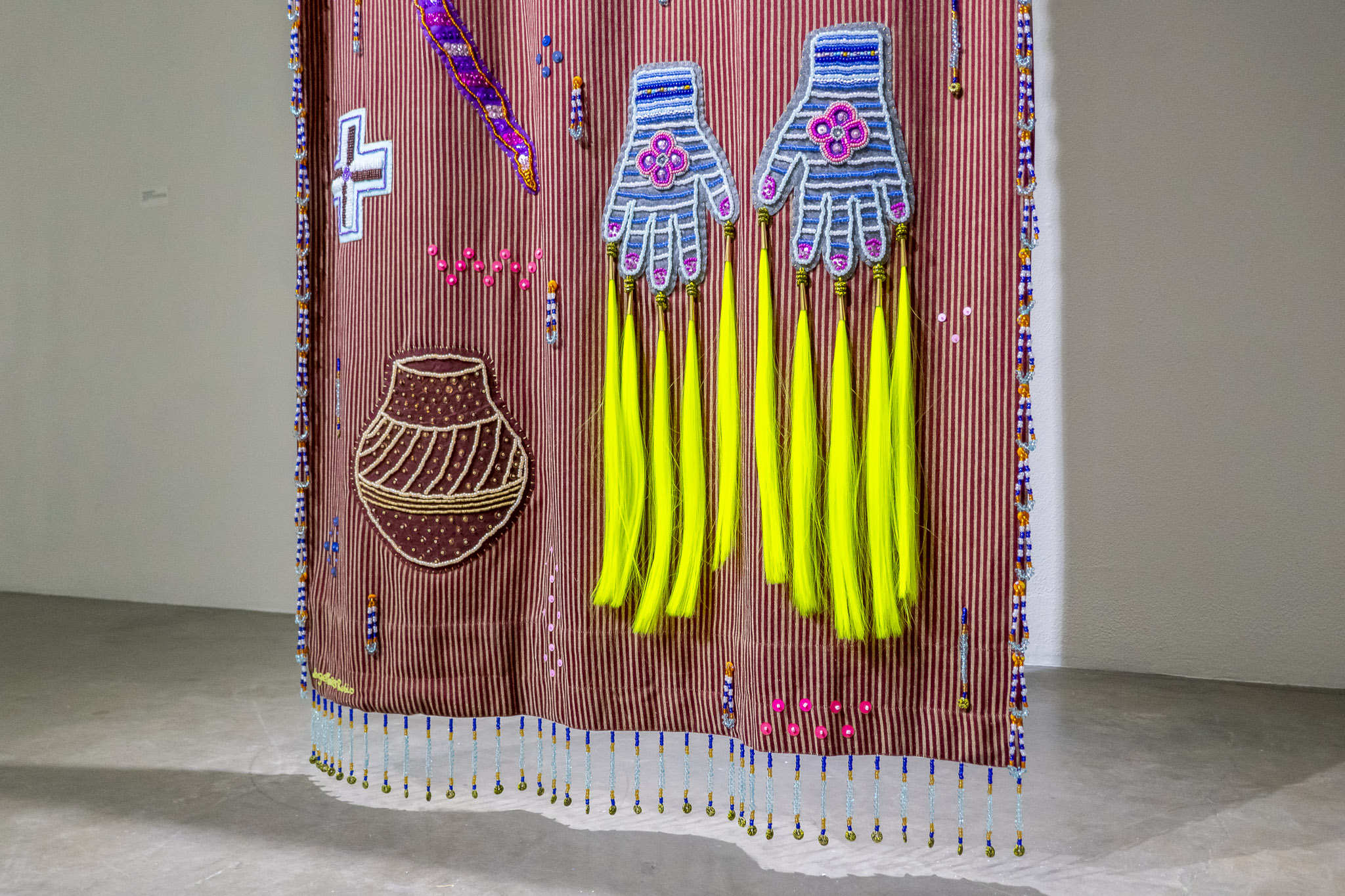
Fantasy Heritage, 2026
Glass beads, vinyl beads, sequins, felt, brass cones, synthetic hair embroidered on curtains
85×37 inch / 215×95 cm